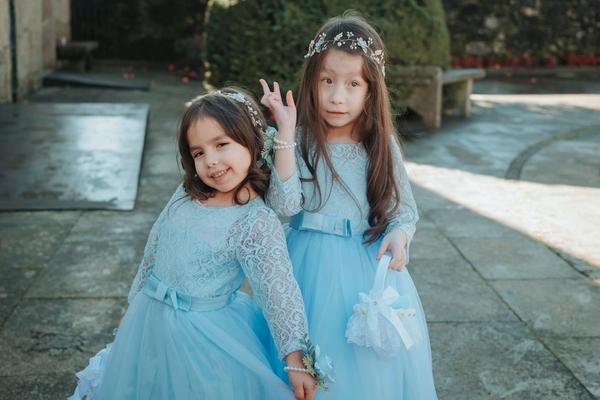
Flower girl dresses can look picture-perfect on a hanger and still be wrong for the child wearing them. A wedding means more than one walk down the aisle: there may be photographs, a long meal, outdoor games, and hours of sitting or standing. The best dress balances the couple’s vision with the flower girl’s comfort, confidence, and freedom to move. Think of the outfit as something a child will live in for the day, not simply a miniature bridesmaid gown.
Start With the Child, Not the Photograph
Before browsing flower girl dress styles, consider the child’s age, personality, and tolerance for formal clothing. Some children love full skirts and sparkly details. Others dislike anything stiff, scratchy, tight, or unfamiliar. Both preferences matter.
Can she sit on the floor, climb a step, use the bathroom, and raise her arms without help? A dress that passes these tests is more likely to stay comfortable throughout the celebration. If she is old enough, let her choose between two suitable options. Having a say makes the outfit feel special rather than compulsory.
Prioritize Fit Over Embellishments
For a kids wedding dress, fit matters more than decorative detail. Check the retailer’s size chart and measure the child’s chest, waist, and height instead of relying only on age labels. Sizing varies between brands, and children may grow between ordering and the wedding.
Look for a bodice that does not pinch under the arms. The waistband should feel comfortable while sitting, and straps should stay in place without constant adjustment. Some room for movement is helpful; slipping shoulders are not.
If alterations are needed, arrange a final try-on fairly close to the event. Buying months ahead can offer more choice, but it also raises the chance of a last-minute fit problem. A kids’ occasionwear sizing guide can help when comparing measurements.
Feel the Fabric and Check the Lining
Tulle, lace, satin, cotton, and chiffon all appear in flower girl dresses, but fabric labels alone cannot tell you whether a dress feels comfortable. A tulle skirt might be light and pretty while the waistband scratches. Satin may look polished but feel warm at a summer garden wedding.
Inspect the lining and inside seams, not just the outer layer. Soft cotton-rich linings suit many children, while well-finished synthetic linings can also feel smooth. Breathability, gentle contact with skin, and minimal rubbing matter more than the fabric name.
Be cautious with stiff netting, sequins, and heavy beadwork near the neck or arms. For sensitive skin, a simpler dress with a soft lining may work better than elaborate decoration. Test the entire outfit before the wedding rather than expecting it to become comfortable during wear.
Choose a Length the Child Can Walk In
Floor-length gowns create a formal look, but they can be awkward for younger children, particularly on stairs or uneven ground. A hem that touches the floor when standing can get caught under shoes during movement.
Tea-length and knee-length flower girl dresses often balance elegance with practicality. Full skirts can work if they are light enough for easy walking and sitting. During a fitting, ask the child to walk, turn, and step up and down. If she must keep lifting the skirt, shorten it or choose another style.
Match the Wedding Mood Without Copying the Adults
A flower girl outfit should complement the bridal party without reproducing the bride’s gown. Shared colors, a ribbon, or a subtle floral detail can create a coordinated look while keeping it age-appropriate. Discuss expectations with the couple before shopping.
Formal indoor weddings
A softly structured satin dress or simple A-line shape looks elegant with minimal accessories. Avoid heavy trains, restrictive bodices, and complicated closures that make bathroom breaks difficult.
Garden and beach celebrations
Lighter fabrics, manageable skirts, and suitable footwear make sense for informal venues. Ivory, blush, and sage are popular possibilities, but the couple’s chosen bridal party colors should guide the decision. A wedding guest dress code guide may provide useful context for the event’s level of formality.
Dress for the Weather and Venue
Warm-weather weddings call for lightweight layers rather than thick petticoats that trap heat. For a chilly ceremony, consider a soft cardigan or jacket that complements the dress without limiting movement.
Think about the ground underfoot. Will the flower girl cross grass, gravel, sand, or a damp path? Shoes and hem length that work in a ballroom may be unsuitable for a countryside venue. Also consider whether the ceremony and reception take place in different settings.
If the celebration continues late into the evening, pack a comfortable change of clothes. The child can wear her special dress for the ceremony and family photographs without keeping it on for every hour of dancing and play.
Make Shoes and Accessories Comfortable, Too
Even a well-fitted dress feels miserable with painful shoes. Choose flexible, secure footwear that the child has worn around the house. Avoid slippery soles and straps that rub. Practice walking on a surface similar to the venue if possible.
Hair accessories should stay put without tugging. Check that decorations are securely attached, and avoid loose beads or small detachable pieces for younger children. A soft ribbon is often easier to manage than an elaborate floral crown.
Run a Full Outfit Test
Imagine a five-year-old flower girl in layered tulle at an afternoon garden wedding. During a home fitting, the skirt catches under her shoes and the waistband feels rough when she sits. Shortening the hem, adjusting the lining, and choosing secure flats could solve those problems before the ceremony.
Try the complete look, including shoes and hair accessories. Ask the child to walk, sit, bend, and use the bathroom. Notice anything she repeatedly pulls at or wants to remove. Pack spare hair ties, tissues, and any useful fasteners. A wedding-day outfit checklist can help keep those small preparations organized.
Frequently Asked Questions
What length is best for flower girl dresses?
Tea-length and knee-length options are practical for many younger children because they are less likely to get underfoot. Longer dresses can work when properly fitted and hemmed.
Should the flower girl match the bride?
No. Her dress can echo the wedding’s palette or overall style without copying the bridal gown. Confirm any preferred shade or fabric with the couple first.
When should you buy a flower girl dress?
Shop early enough to allow for shipping and alterations, but schedule a fitting near the wedding because children grow. Check the return policy before buying.
What should a flower girl wear under her dress?
Choose soft undergarments that do not pinch or show through. A smooth lining or lightweight slip may help with scratchy layers, but avoid unnecessary bulk in hot weather.
Let Comfort Be Part of the Celebration
The most successful flower girl dresses look lovely and let children behave like children. Begin with soft fabrics, reliable fit, a practical hem, and the realities of the venue. Then choose colors and details that suit the wedding. A comfortable child is more likely to enjoy the aisle walk, smile naturally in photographs, and remember the day happily.