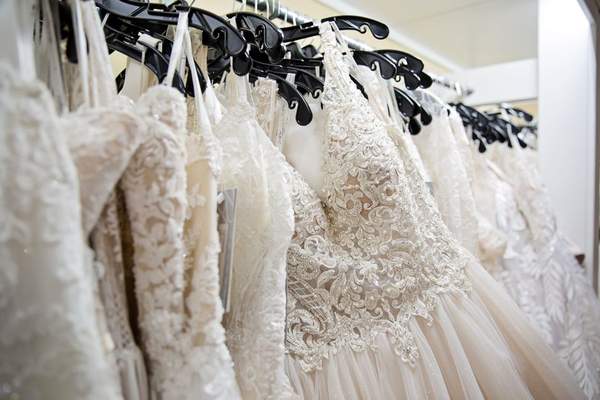
The first surprise of wedding dress shopping sometimes comes from a tiny label inside the gown. You may wear one size in everyday clothes, then discover a bridal sample with a completely different number fits comfortably. That does not mean your body has changed. Wedding dress sizing follows brand-specific charts, construction methods and fit expectations that often differ from ordinary clothing.
Understanding those differences before your appointment makes it easier to compare gowns, discuss alterations and order with confidence. The most useful starting point is not the number on your favourite jeans; it is a set of accurate measurements.
Why Bridal Sizes Can Differ From Everyday Sizes
Many traditional bridal designers use sizing systems that run smaller than familiar high-street or ready-to-wear labels. A bride who usually buys a size 8 might need a higher numbered bridal size. However, this is not a universal conversion rule. Some retailers use sizing closer to everyday clothing, and measurements vary between designers.
That is why a wedding dress size chart is more useful than a general statement that bridal gowns always run one or two sizes small. Compare the actual bust, waist and hip numbers for the specific designer and style, using the same country’s sizing system. A UK size and a US size with the same number are not equivalent.
How to Take Bridal Gown Measurements
Use a flexible tape measure, stand naturally and ask someone to help if possible. Measure over close-fitting undergarments rather than bulky clothing. Keep the tape level, comfortably snug and untwisted, without holding your breath or pulling it into your skin.
Bust
Wrap the tape around the fullest part of your bust and across your back. Keep your arms relaxed. If you expect to wear a particular bra or supportive undergarment, tell the salon, as it may affect the fit of the bodice.
Natural Waist
Measure around your natural waist, generally the narrower area between your ribs and hips. This is not necessarily where your jeans waistband sits. Bend gently to one side to help identify the natural crease, then straighten before measuring.
Hips
Measure around the fullest part of your hips and seat while keeping your feet together. This number matters especially for sheath, mermaid and fit-and-flare styles. A full A-line or ball-gown skirt may offer more room through the hips, although the designer’s chart still matters.
Length and Hollow-to-Hem
Some designers also request a hollow-to-hem measurement, taken from the hollow at the base of the neck to the intended hem position. Follow the designer’s instructions and account for your planned shoe height. Check whether the order includes a standard length, a length option or a custom measurement.
Record your numbers with the date and units. If measuring at home, have the salon check them before placing a nonreturnable order.
How to Read a Wedding Dress Size Chart
Find the exact designer’s chart rather than using a generic bridal sizing conversion. Locate your bust, waist and hip measurements separately, then see which size each falls into. It is common to match different sizes in different areas.
Imagine your bust and hips correspond to one size, but your waist corresponds to the next size up. Ordering the smaller size simply because it matches two measurements could leave the waist too tight. For a standard-size order, a stylist may recommend starting with the size that accommodates the most restrictive measurement, then planning alterations where the gown has extra room.
That decision depends on silhouette, corsetry, fabric, seam allowances and the designer’s ordering policy. Ask which measurements are controlling for your chosen gown instead of automatically selecting the largest number on the chart.
Charts may describe body measurements, not the finished dress dimensions. Do not add your own allowance unless the brand specifically tells you to. For more detail on how different cuts follow the body, explore wedding dress silhouettes and fit.
Why a Bridal Sample May Not Fit Like Your Ordered Dress
Salon samples are try-on gowns, not necessarily your intended size. Stylists may secure a larger sample with clips or use an extender when a smaller sample cannot close. This helps you visualise the design, but it does not accurately reproduce the final fit.
If you need a particular sample size or accessible fitting setup, contact the boutique before visiting. Sample ranges vary widely, even between stores that stock the same designer. A bridal appointment checklist can help you prepare questions in advance.
What Alterations Can and Cannot Fix
Most wedding dresses need some fitting work after arrival. Common alterations include hemming, adjusting straps, refining the waist and adding a bustle to manage the train. Some gowns can be taken in more readily than they can be let out, but the possibilities depend on available seam allowance and construction.
Intricate beadwork, lace placement, boning, sheer panels and elaborate necklines can make changes more complicated or expensive. A tightly structured bodice cannot always be enlarged safely, and shortening a heavily detailed hem may require special handling.
Ask about alteration costs and fitting appointments before committing to a dress, especially if your budget is fixed. Bring your chosen shoes and undergarments to fittings, since heel height and support can change how the gown sits. The bridal alterations timeline is also worth reviewing when you choose an order date.
Questions to Ask Before You Order
Confirm which size chart applies to your exact gown, who will take the final measurements, and whether any made-to-measure options are available. Ask whether the boutique recommends a standard size followed by alterations, and which parts of the design are difficult to change.
Wedding Dress Sizing FAQs
Do wedding dresses always run small?
No. Many traditional bridal labels use higher numbers than everyday clothing, but others follow different systems. Compare your current measurements with the specific designer’s chart instead of relying on a fixed size conversion.
Should I order a smaller size if I plan to lose weight?
It is generally safer to order according to your current measurements and the salon’s professional advice. Future changes are uncertain, and not every gown can be let out. Discuss possible fitting adjustments before ordering.
What if my bust, waist and hips suggest different sizes?
That is normal. Your stylist should evaluate the measurements against the gown’s shape and construction, identify the least adjustable area and explain the expected alterations.
Can I work out my bridal size from a sample dress?
A sample gives a useful sense of silhouette and comfort, but clips, extenders and sample wear can distort the fit. Your ordered size should be based on fresh bridal gown measurements and the designer’s official sizing guidance.
Choose the Fit, Not the Label
The most helpful approach to wedding dress sizing is to treat the label as an ordering tool, not a verdict on your body. Accurate measurements, a designer-specific chart and an honest conversation about alterations will tell you far more than an everyday dress size. Once those details are settled, you can focus on how the gown looks, supports you and feels when you move.